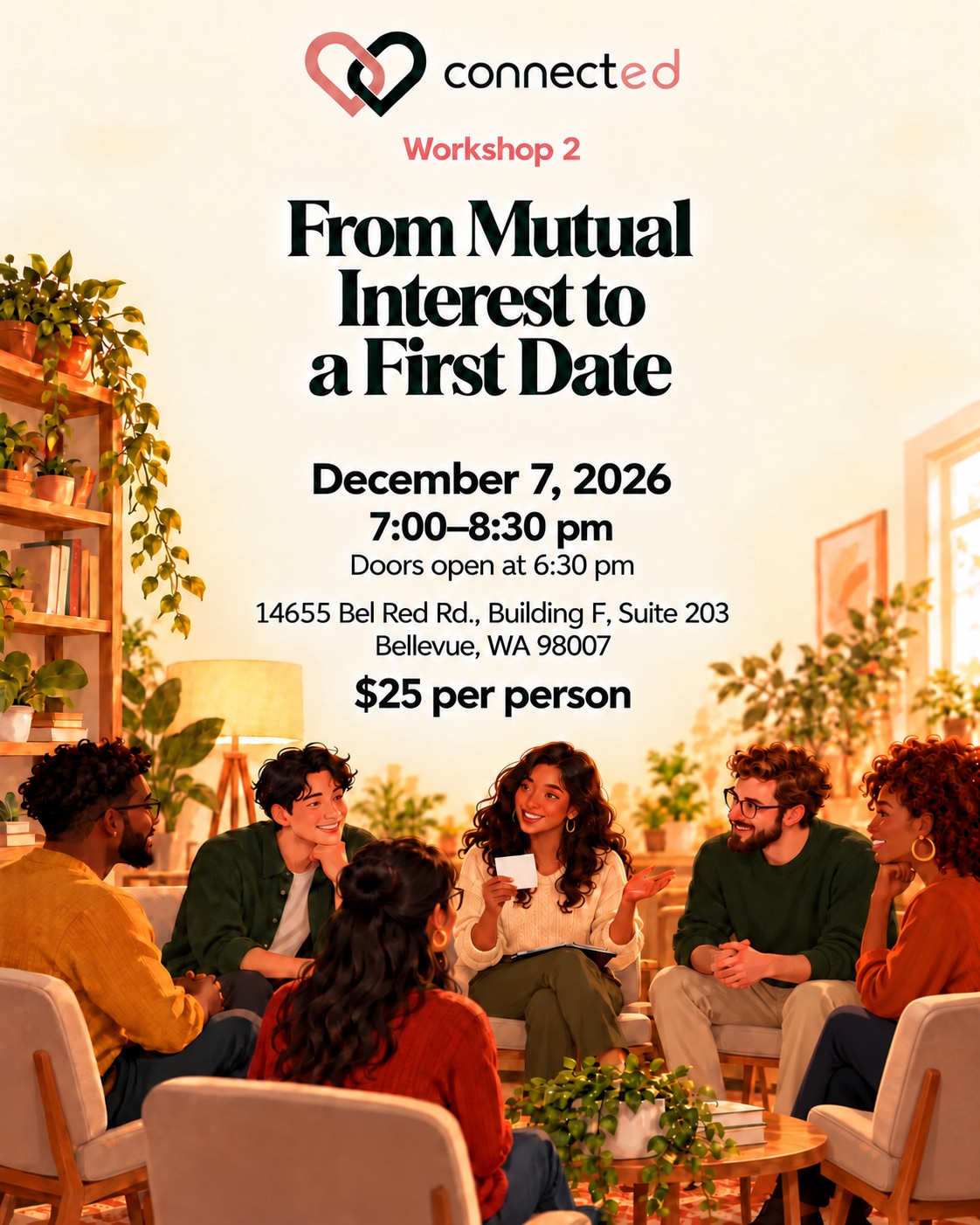

Build the skills that support real connection.
Connected PNW is a guided dating and interpersonal skills program for adults who want to understand their patterns, communicate authentically, and practice building real connection in a supportive group setting.
This is not therapy. This is not a dating service. It is a skills-based learning experience — part workshop, part practice space, part social community — where people learn how to show up in relationships with more awareness, intention, and confidence.
Coaching model
Learn → Practice → Give and receive feedback → Integrate → Ready for mature relationships
This is the core coaching model behind Connected PNW. Participants do more than gain insight: they learn, practice in real interactions, receive feedback, integrate what they discover over time, and build the capacity for more mature, healthy relationships.
What participants gain
Practical tools, real-world practice, and deeper relational learning.
Participants join Connected PNW to gain insight, repeated practice, and thoughtful feedback that help them date with more clarity and confidence.
Insight
Learn about interpersonal strengths, blind spots, recurring patterns, and what you actually need in a relationship.
Skill
Build communication and relational skills that help you express yourself more clearly and show up more authentically.
Confidence
Practice in lower-pressure environments before higher-stakes dating, with support from peers and facilitators.
Program journey
From structured learning to deeper paired practice.
Connected PNW is designed as a progression from insight to practice to more immersive relational learning. The goal is not just to discuss dating, but to create a supported path where people can actually experience how connection unfolds over time.
Group learning
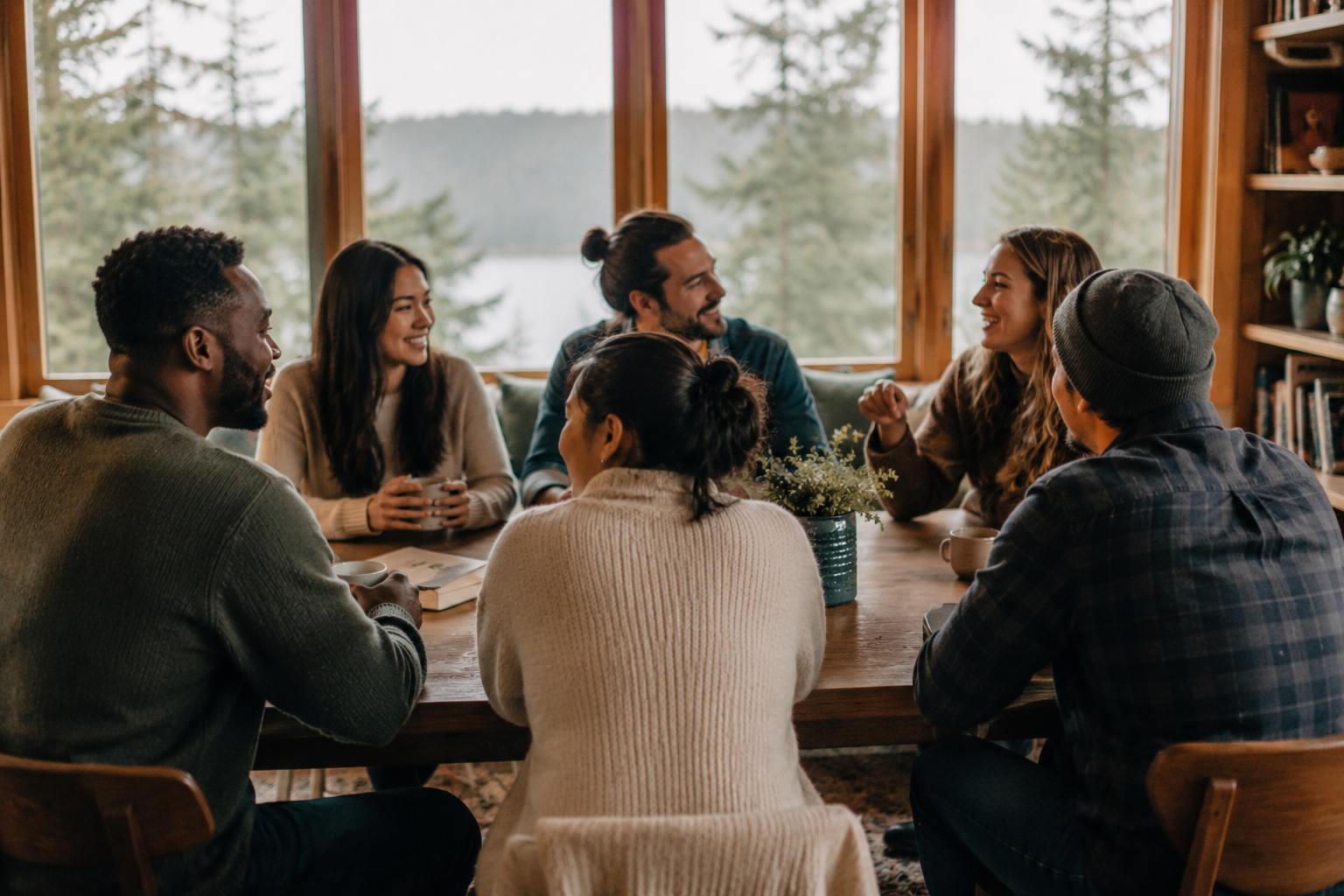
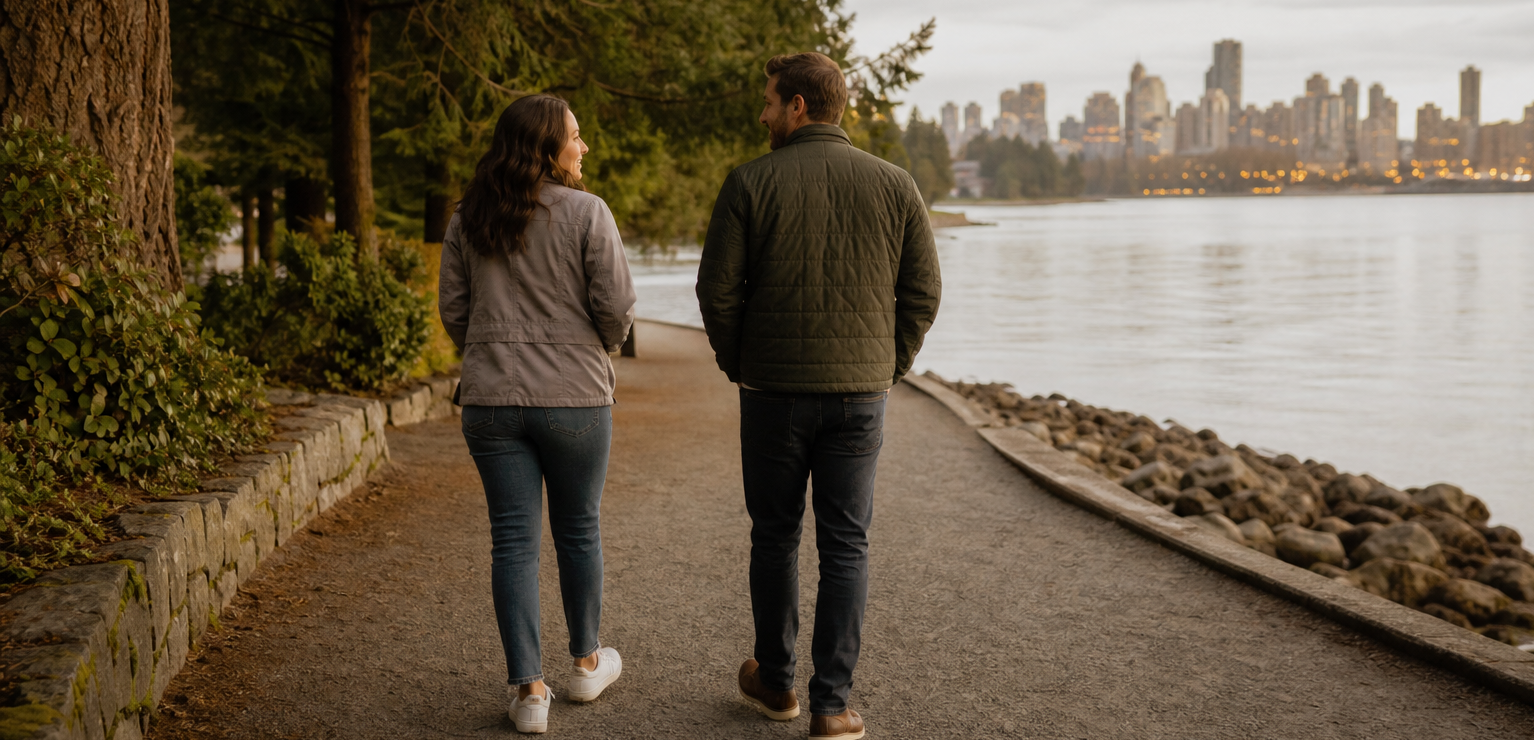
Participants begin in a structured group setting focused on communication, relational patterns, emotional attunement, boundaries, expectations, sexuality, and the interpersonal skills that support healthy early dating.
Social Nights
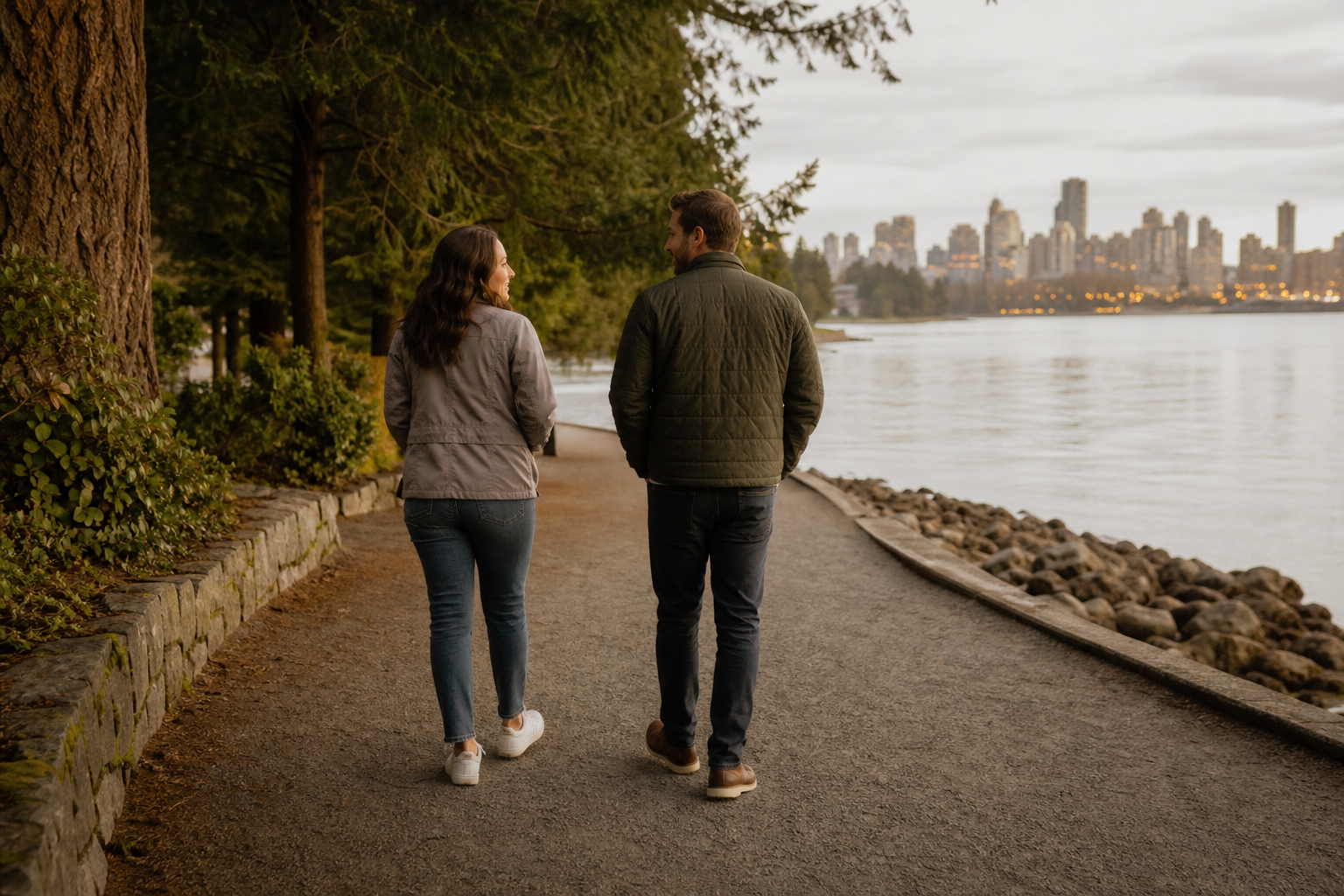
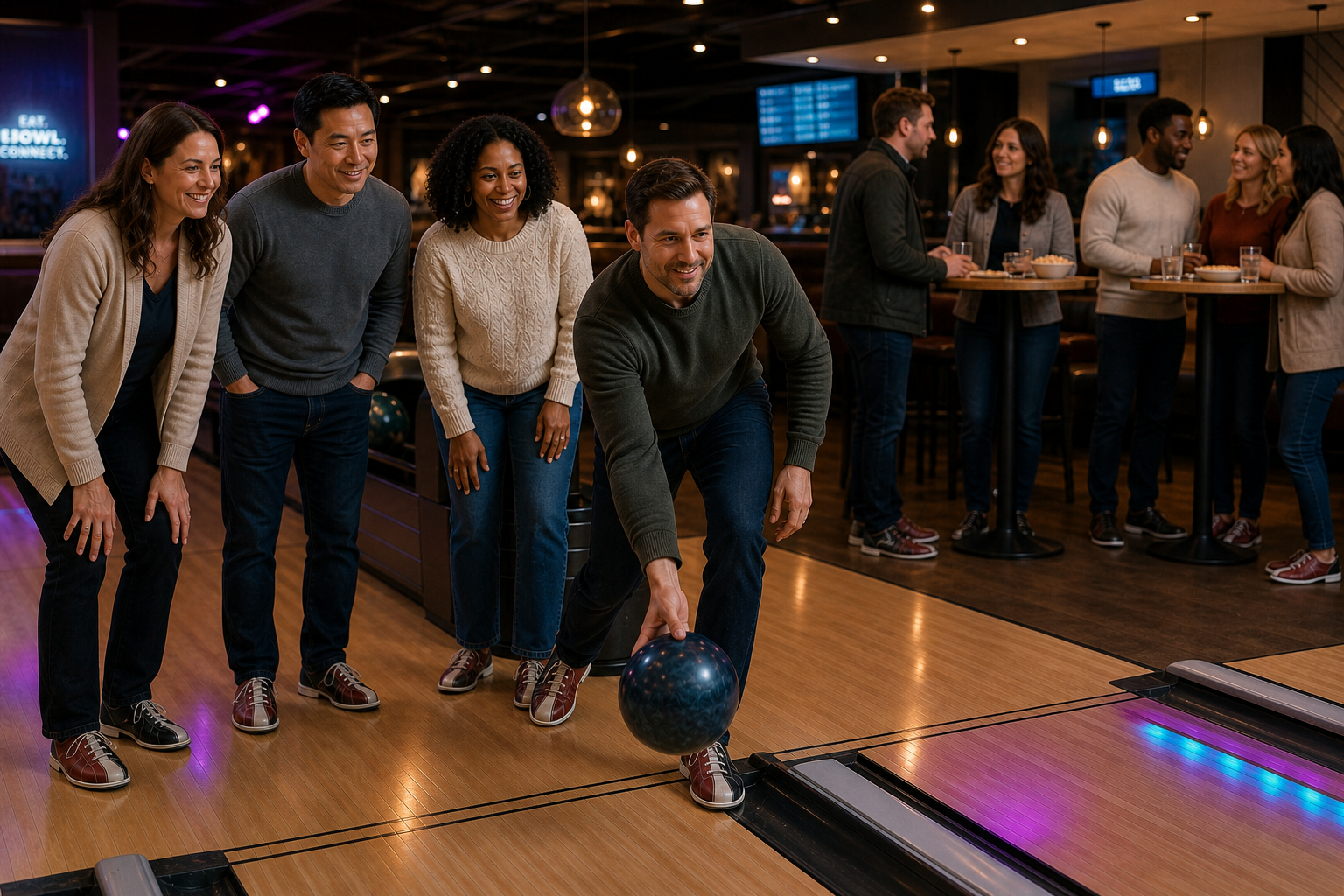
Lower-pressure social outings help participants practice new skills, notice habits in action, and build confidence in settings that feel more natural than a classroom or workshop.
Paired practice
A central part of the program is a deeper paired-practice phase. Participants are paired with another participant, with meaningful input into who they are paired with, and practice dating that individual over a three-month period. This creates a much deeper kind of relational practice than a one-time interaction.
Regular coaching along the way
During the paired-practice phase, participants receive ongoing coaching and reflection so they can understand what is happening in real time, make more intentional choices, and integrate what they are learning as the relationship develops.
About Connected PNW
A structured relational learning experience.
Connected PNW helps adults learn and practice the interpersonal skills that support healthy, authentic dating and relationships. We believe that when you know who you are, what you want from a relationship, and how to stay connected through the early stages of dating, you are far more likely to find and keep a meaningful partnership.
What Connected is
A dating skills group that builds relational ability, self-understanding, and confidence; a safe space to discover your authentic self, rough edges, and growth areas; a lower-pressure environment for practicing before higher-stakes dating; and a social practice community supported by skilled facilitators.
What Connected is not
Not therapy. Not a matchmaking or dating service. Not a promise of a perfect match. Not trial-and-error without support. Connected PNW is skills-based coaching informed by deep relational expertise.
The people behind Connected PNW.
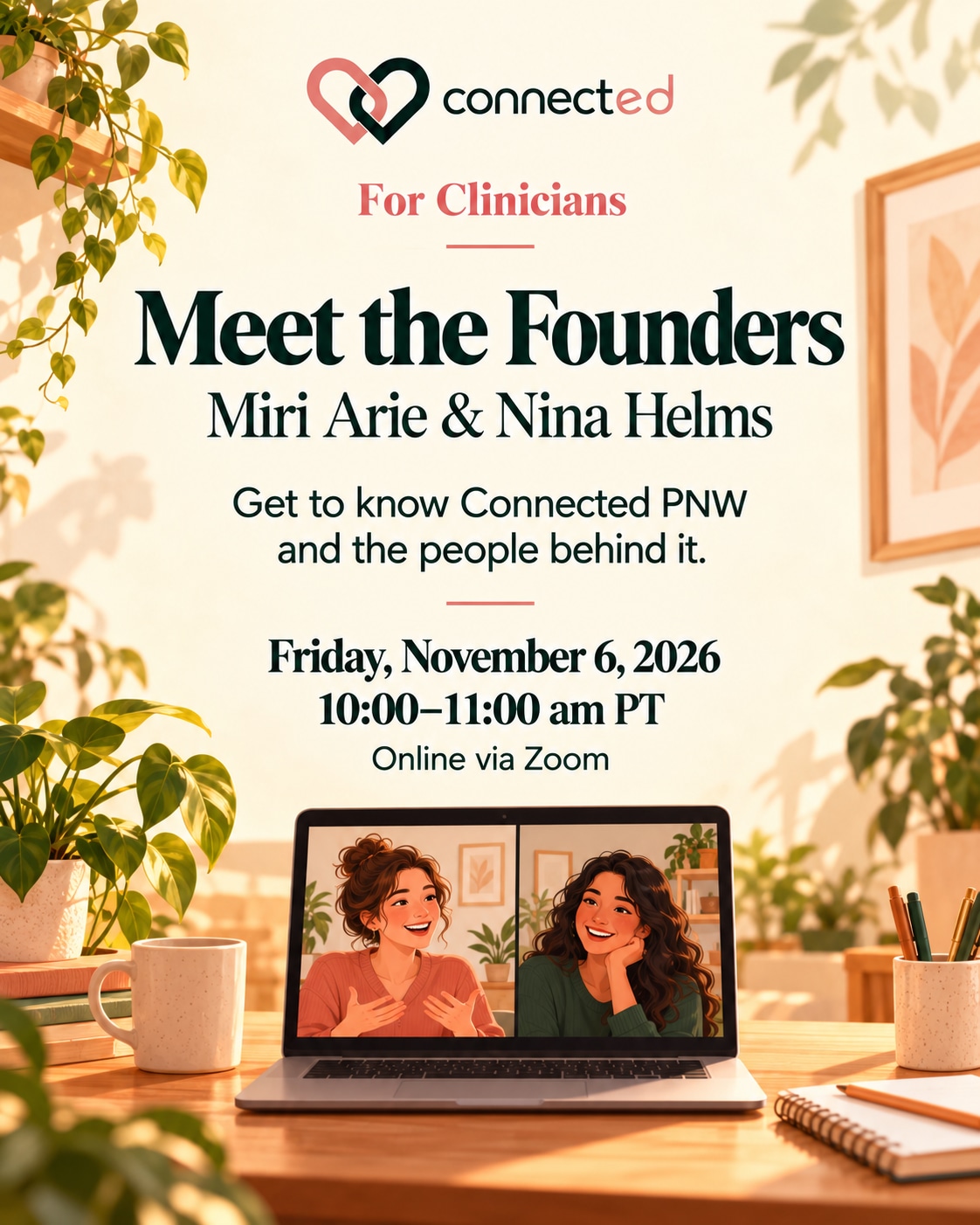
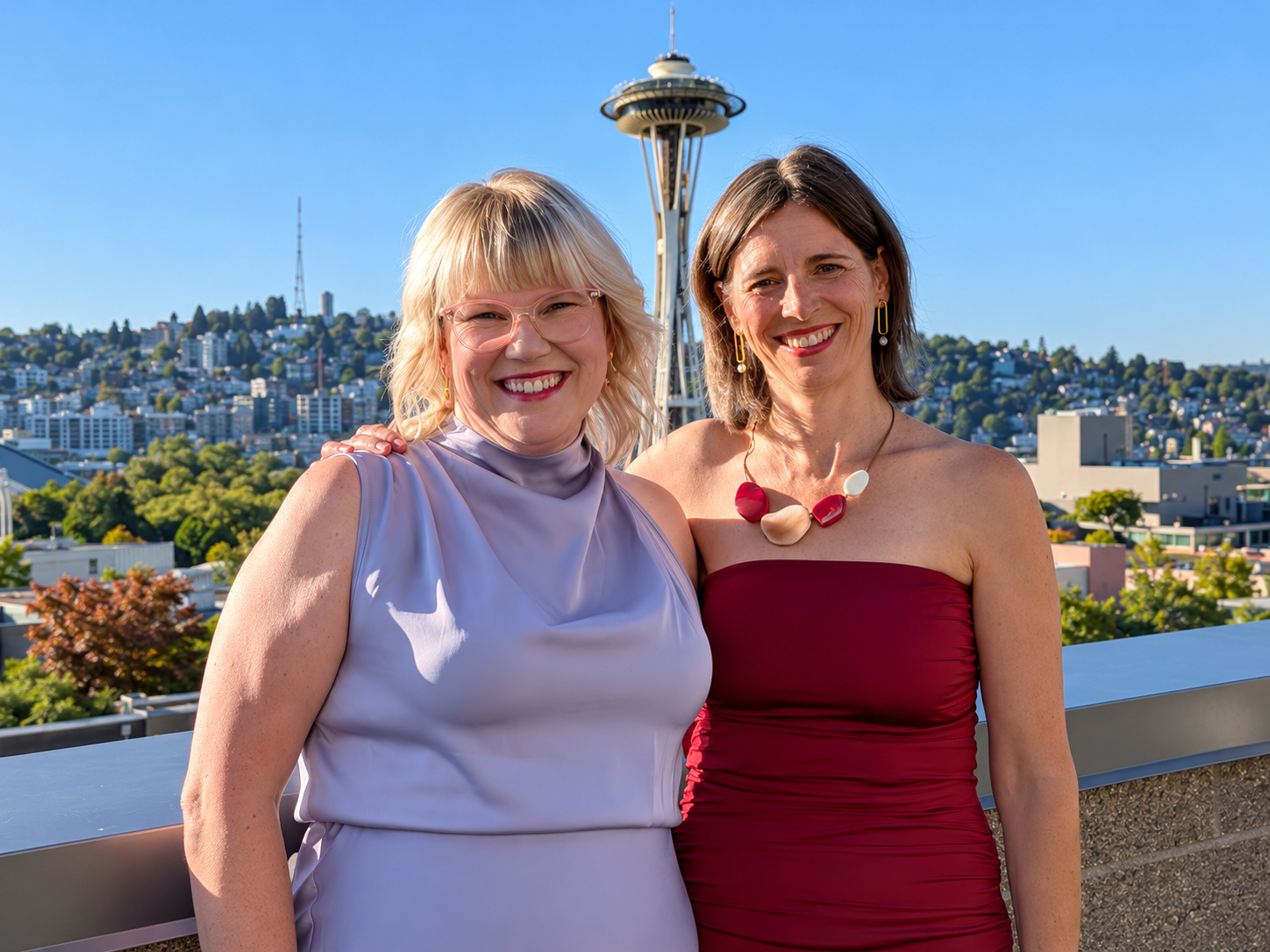
Connected PNW was created by co-founders Nina Helms and Miri Arie to give adults in the Pacific Northwest a supported place to learn, practice, and grow in how they show up in dating and relationships.
Founders & facilitators.
We bring together deep training in relational psychology, group work, and community building with a grounded, human approach to dating and connection.
Connected PNW grew out of years of listening to what people actually struggle with in early dating: anxiety, confusion about boundaries, repeating patterns, and a lack of places to practice new ways of relating in real time.
Rather than offering quick fixes or abstract advice, we wanted a space where people could experiment, reflect, and try again with support from thoughtful facilitators and peers.
Our work is grounded in attachment theory, trauma-informed practice, and a deep respect for people's lived experience. It is also playful, honest, and oriented toward real-world relationships — not perfection.
Meet the founders.
Each founder brings a distinct lens and set of skills to Connected PNW, while sharing a commitment to honest, supportive learning spaces.
Dr. Miri Arie
Dr. Miri Arie is a psychologist, group facilitator, and relational skills expert specializing in helping adults understand their interpersonal patterns and build the skills needed for authentic, confident connection.
Her work centers on the belief that meaningful relationships are not just something we find—they are something we learn how to create through awareness, practice, and feedback. She is particularly interested in how people show up in early dating, friendship, and intimate relationships, and in helping individuals move from insight into real-world relational change.
Professional Background
Dr. Arie's background in psychology and group work informs her approach to relational expertise. She is a Certified Group Psychotherapist (CGP) with extensive experience facilitating group processes, interpersonal learning environments, and attachment-informed work with individuals, families, and communities.
Her clinical and academic training includes Cognitive Behavioral Therapy (CBT), Attachment-Based approaches, Integrative Attachment Family Therapy (IAFT), Internal Family Systems (IFS), trauma-informed care, and specialized training in working with relational and emotional patterns that develop over time.
A Relational Philosophy
At the core of Dr. Arie's work is a belief that growth happens through engagement.
She emphasizes that resilience is not the absence of discomfort, but the ability to stay present, curious, and connected even when things feel uncertain or challenging. In her view, meaningful change requires both insight and practice—the willingness to step into new experiences, notice what arises in real time, and experiment with different ways of being with others.
Beyond the Work
Dr. Arie brings the same values that guide her professional work into her personal life. She is an avid climber, dancer, pianist, language learner, and reader, and she regularly participates in social justice and community-based initiatives.
She values time outdoors, meaningful relationships, and collaborative work with colleagues and community. These experiences continue to reinforce her belief that growth is an ongoing, lived process—shaped not only in structured programs, but in everyday engagement with life.
Nina Helms
[Placeholder for Nina's intro — 1–2 sentences describing her background and focus area.]
Professional Background
[Nina's clinical or professional background, training, and areas of expertise.]
A Relational Philosophy
[What guides Nina's approach to this work — her core beliefs about connection, practice, and growth.]
Beyond the Work
[Personal interests, community involvement, or other dimensions that inform who she is as a facilitator.]
How we hold the space.
Our values shape how we design the program, how we facilitate, and how we invite participants to relate to one another.
Honest & kind
We believe that change happens when people can receive clear feedback in a way that is grounded, caring, and attuned to impact.
Practice over perfection
Dating and relating are messy. We prioritize experimentation, reflection, and trying again over getting it right the first time.
Consent & boundaries
We treat consent, pacing, and boundaries as core skills, not add-ons, and build them into every part of the program.
FAQ
Questions a future participant might ask.
This section helps clarify the most important public-facing questions around boundaries, fit, and the structure of the program.